


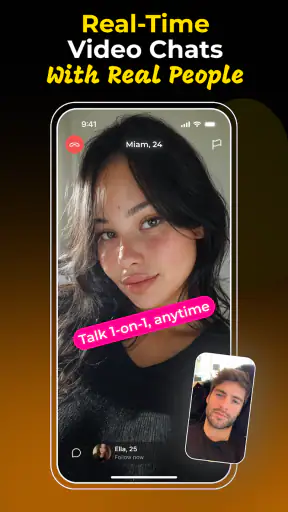
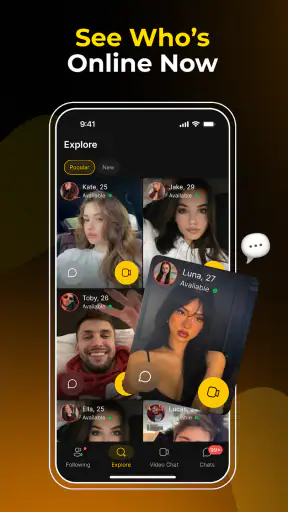
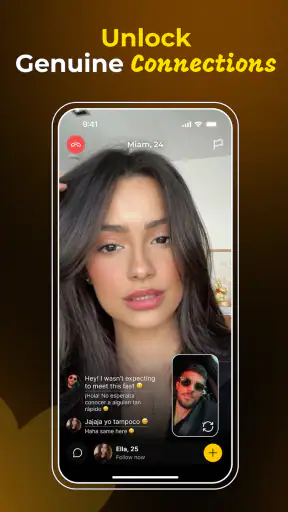
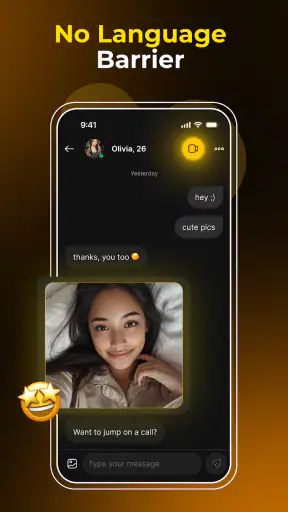
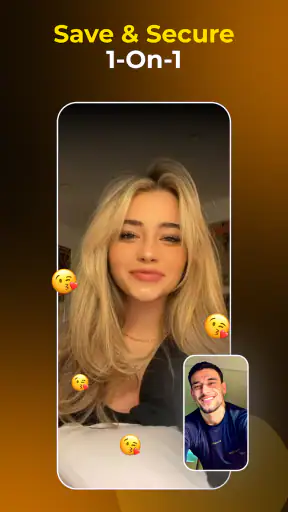
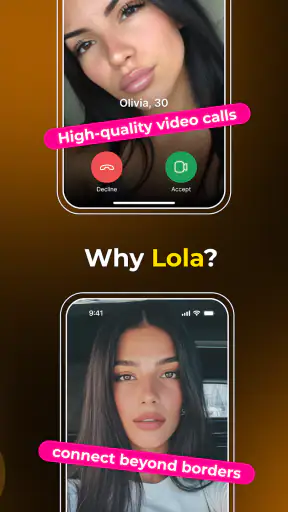
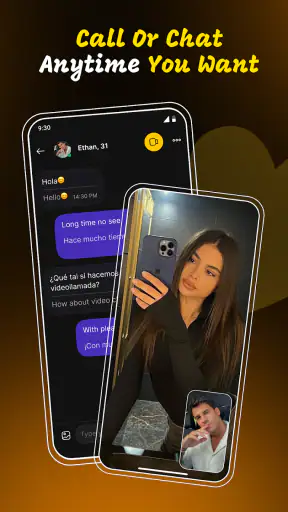
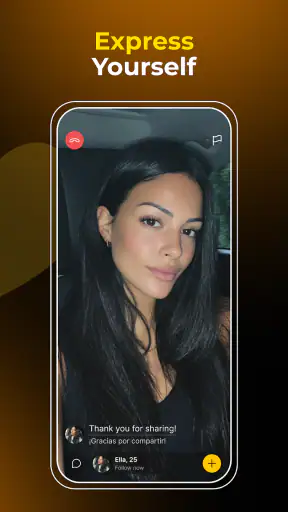
I approached Lola: Live Video Chat App as a social tool for people who want conversation to begin immediately rather than through a long profile-building process. Its central idea is simple: connect with another person in a one-to-one live video conversation, with instant translation intended to make language differences less of a barrier. That makes it quite different from a conventional social network, a text-first messaging service, or a dating app built around swiping.
My overall impression is that Lola is most interesting when you treat it as a spontaneous meeting place. It is not the app I would choose for carefully organizing a private group, maintaining a long-running chat history, or managing a professional community. I would consider it when I want a direct human interaction and I am comfortable with the unpredictability that comes with meeting people through live video.
The app is free to install, although it includes optional purchases ranging from $0.99 to $149.99 per item. That range matters because the basic download does not tell you how much the experience may cost if you become a frequent user of paid extras. Lola is also marked Mature 17+, so I would not treat it as a general-purpose app for children or younger teenagers.
How I would decide whether Lola fits
The format matters more than the headline
The first decision is whether you actually want live video. Lola is built around one-to-one conversations, so the camera is not a secondary feature added to a messaging app. It shapes the entire experience. You need to be ready to appear on screen, react in real time, and decide quickly whether a conversation is comfortable and worth continuing.
That immediacy can be refreshing. A text profile can make social discovery feel like filling out a form, while a live exchange gives you a much faster sense of someone’s communication style. On the other hand, there is less room to think before responding. If you prefer to write carefully, browse quietly, or get to know someone through several messages first, Lola may feel too exposed or too fast.
The translation angle is equally important. Instant translation can help when two people do not share a strong common language, and that opens a door that ordinary local chat apps may leave closed. Still, translation should be treated as assistance rather than a guarantee of perfect understanding. Humor, slang, hesitation, tone, and cultural references do not always survive a quick conversion from one language to another.
Who is likely to enjoy it
I can see Lola working well for curious adults who enjoy meeting people outside their immediate circle. It may suit someone practicing conversational confidence, exploring different cultures, or simply looking for a short social break that feels more personal than scrolling through posts. The one-to-one format also makes the interaction easier to focus on than a busy public feed.
It is less suitable for someone who wants predictable contacts, detailed compatibility filters, or a quiet asynchronous routine. It is also a poor match for anyone who dislikes being on camera, has limited patience for awkward openings, or expects every conversation to become a lasting connection. The app’s value depends heavily on your comfort with uncertainty.
What the current product tells me
Lola comes from Lola Team and sits in the social category. It has reached over a million installs and holds an average rating of 4.2 from around 8.6 thousand ratings, which suggests that many users find the concept worthwhile while leaving plenty of room for individual differences in experience. The app has 205 written reviews, so I would look beyond the headline score and think carefully about whether its live-video format matches your habits.
The listed release date is August 20, 2025, and the current version is 2.2.7. It requires Android 8.0 or later. Those details make the app accessible to many Android users, but compatibility alone should not be the deciding factor. A phone that can run Lola is not necessarily a phone, connection, or environment that makes live video enjoyable.
A realistic everyday use case
Imagine finishing work with twenty minutes to spare before dinner. You do not want to commit to a large group call, and you are not in the mood to compose a polished social post. You open Lola, enter a one-to-one video conversation, and meet someone who speaks a different language. Translation helps you get through the first exchanges, but you still need to speak clearly, be patient, and notice when a phrase has been interpreted too literally.
In that situation, Lola’s strength is speed. You can move from curiosity to an actual conversation without arranging a meeting in advance. Its weakness is that the same speed can produce an interaction that feels shallow or uncomfortable. I would use it for short, open-ended encounters, not as my only way to build meaningful relationships.
Small habits that improve the experience
My first practical tip is to decide your boundaries before starting. Know how long you are willing to stay in a conversation, what subjects you will avoid, and when you will leave. In a live setting, making those decisions beforehand prevents politeness from turning into an unwanted obligation.
My second tip is to keep translation-friendly language ready. Short sentences, familiar words, and one idea at a time are more useful than complicated jokes or fast explanations. If a translated sentence sounds strange, rephrase it instead of repeating it louder or assuming the other person misunderstood you deliberately.
A third useful habit is to judge the conversation by consistency rather than by a strong first impression. Live video can create instant familiarity, but a confident opening does not tell you whether the person respects limits or communicates well over time. I would avoid sharing sensitive personal information simply because the first few minutes feel friendly.
Finally, use the app when your surroundings support it. A stable connection, reasonable lighting, and a private place make a noticeable difference. If you are in a crowded room, relying on mobile data, or worried about being overheard, the pressure of live video may outweigh the social benefit.
Where Lola is strongest, and where another category may be better
Its advantage over text-first social apps
Compared with text-first social platforms, Lola removes much of the delay between meeting and interacting. You do not have to wait for a message to be noticed, interpret a profile, or keep a conversation alive through short written replies. Facial expression and voice can make a brief exchange feel more natural than a long chain of messages.
The one-to-one structure is another advantage. Public feeds encourage performance for an audience, while a direct video conversation can feel more focused. For someone who finds large communities overwhelming, a single conversation may be easier to manage. It also gives you an earlier opportunity to decide whether the interaction feels genuine and comfortable.
That benefit comes with a trade-off: text-first apps give you more control over timing. You can pause, edit, ignore, or return later. Lola asks you to make decisions in the moment. I would choose Lola when immediacy matters more than careful pacing, and a messaging app when I want a record of the conversation or more time to think.
Its advantage over profile-and-match services
Profile-driven social and dating services are usually better when your priority is filtering. They let you compare interests, location, biographies, or other signals before starting a conversation. Lola’s appeal is almost the opposite: it makes the meeting itself the main source of information.
That can feel more authentic because you are not relying entirely on a carefully edited profile. It can also feel less efficient. If you have a very specific goal, such as finding people with a narrow shared interest or arranging a structured activity, a service with stronger search and matching tools may save time.
I would not install Lola expecting it to replace every type of social app. It is better understood as a live discovery layer. It can complement a slower platform, but it is not automatically a better choice for users who value detailed planning and predictable compatibility.
Its advantage over group video communities
Group video spaces can be lively, but they often make it difficult to be heard or to form a direct connection. Lola’s one-to-one design gives both participants more conversational space. If your goal is a focused exchange rather than an audience or a room full of competing voices, that is a meaningful difference.
Group communities may still be preferable for shared hobbies, moderated events, or meeting several people at once. They can provide a stronger sense of belonging when the subject is more important than the individual encounter. Lola is more immediate and personal, but also more dependent on the quality of the person you happen to meet.
Translation is helpful, not a substitute for judgment
The translation feature is the part that most clearly separates Lola from an ordinary random video chat. It lowers the initial language barrier and can make international conversations feel possible without requiring both people to be fluent in the same language.
Even so, I would not use translation as a reason to ignore confusion. If a response seems unusually rude, overly intimate, or inconsistent, ask for clarification. Automated translation can change nuance, and a misunderstanding in a live conversation can escalate quickly because there is no long pause between messages.
This also creates an interesting trade-off. The feature may encourage more diverse conversations, but it can make subtle trust signals harder to read. I would keep early discussions light, confirm important points in simple language, and avoid treating a smooth translated exchange as proof that you know the other person well.
Privacy and comfort should shape your setup
Live video naturally reveals more than text. Your face, voice, surroundings, and daily routines can all become visible, even when you did not intend to share much. Before using Lola, I would check what is behind me, remove identifying details from view, and avoid showing documents, work screens, addresses, or recognizable locations.
I would also be cautious about moving a conversation elsewhere too quickly. Someone who immediately pressures you for contact details, money, private images, or personal information is giving you a reason to end the interaction. The app’s social design makes quick connection easy, but it does not remove the need for ordinary online judgment.
The Mature 17+ rating reinforces the need for adult supervision of the decision to use it, not because every interaction will be problematic, but because live social discovery can expose users to mature conversations and unpredictable behavior. If you are choosing an app for a younger family member, I would look for a service designed specifically around stronger age-appropriate controls instead.
Understanding the cost before it becomes a habit
The free entry point is useful because you can evaluate the basic idea without paying upfront. I would spend time learning how conversations work and deciding whether the format genuinely fits before considering any optional purchase. The presence of in-app items from $0.99 to $149.99 means the upper end is substantial, so impulse buying is the main financial risk I would watch.
My advice is to set a personal spending limit before browsing paid options. Do not assume that a purchase will improve the quality of every conversation, and do not spend simply because an interaction ended awkwardly. A paid feature cannot guarantee compatibility, respect, or a meaningful connection.
This is also where Lola differs from a conventional free messaging app. With ordinary chat, your main investment is time and attention. Here, the possibility of optional spending can become part of the social decision. If you want a completely predictable-cost experience, a free text community with no in-app purchasing may be a better fit.
What switching to Lola really involves
Moving from a text-based service to Lola is not just downloading another app. You are changing how you present yourself, how quickly you respond, and how you manage personal boundaries. I would begin with short sessions rather than treating the app as a replacement for an established social routine.
It also helps to keep expectations modest. If you normally choose contacts through profiles, the first few Lola conversations may feel random. If you normally use group calls, the private format may feel unusually intense. Give yourself permission to leave conversations that do not feel right; staying merely to avoid seeming impolite is not a good reason to continue.
For users already comfortable with live video, the adjustment should be smaller. The bigger question is whether instant translation and spontaneous discovery offer something your current apps do not. If your existing service already gives you reliable one-to-one video, international contacts, and the level of control you want, Lola may add novelty without solving a real problem.
My recommendation
I recommend Lola to adults who want quick one-to-one social encounters and are genuinely interested in speaking with people who may use another language. Its strongest case is someone who values direct interaction, accepts that conversations will vary, and can maintain clear boundaries while using live video.
I would skip it if you want a carefully filtered dating experience, a stable group community, private text messaging, or a fully predictable free service. I would also avoid it when your internet connection, surroundings, or comfort with cameras make live conversation stressful. In those cases, a text-first or profile-based alternative is likely to feel more useful rather than merely different.
After weighing the format, translation, privacy, and optional spending, I see Lola as a focused social experiment rather than an all-purpose communication app. The concept is appealing because it turns international discovery into an immediate conversation, but that same immediacy demands more judgment from the user.
My bottom line: try Lola if the idea of a spontaneous, translated one-to-one video chat sounds energizing, and start with firm limits on time, personal information, and spending. If you prefer control, detailed matching, or conversations that unfold slowly, choose a different category of social app. Lola is worthwhile for the right personality, but its value comes from how you use its live format—not from replacing every other way of connecting.


